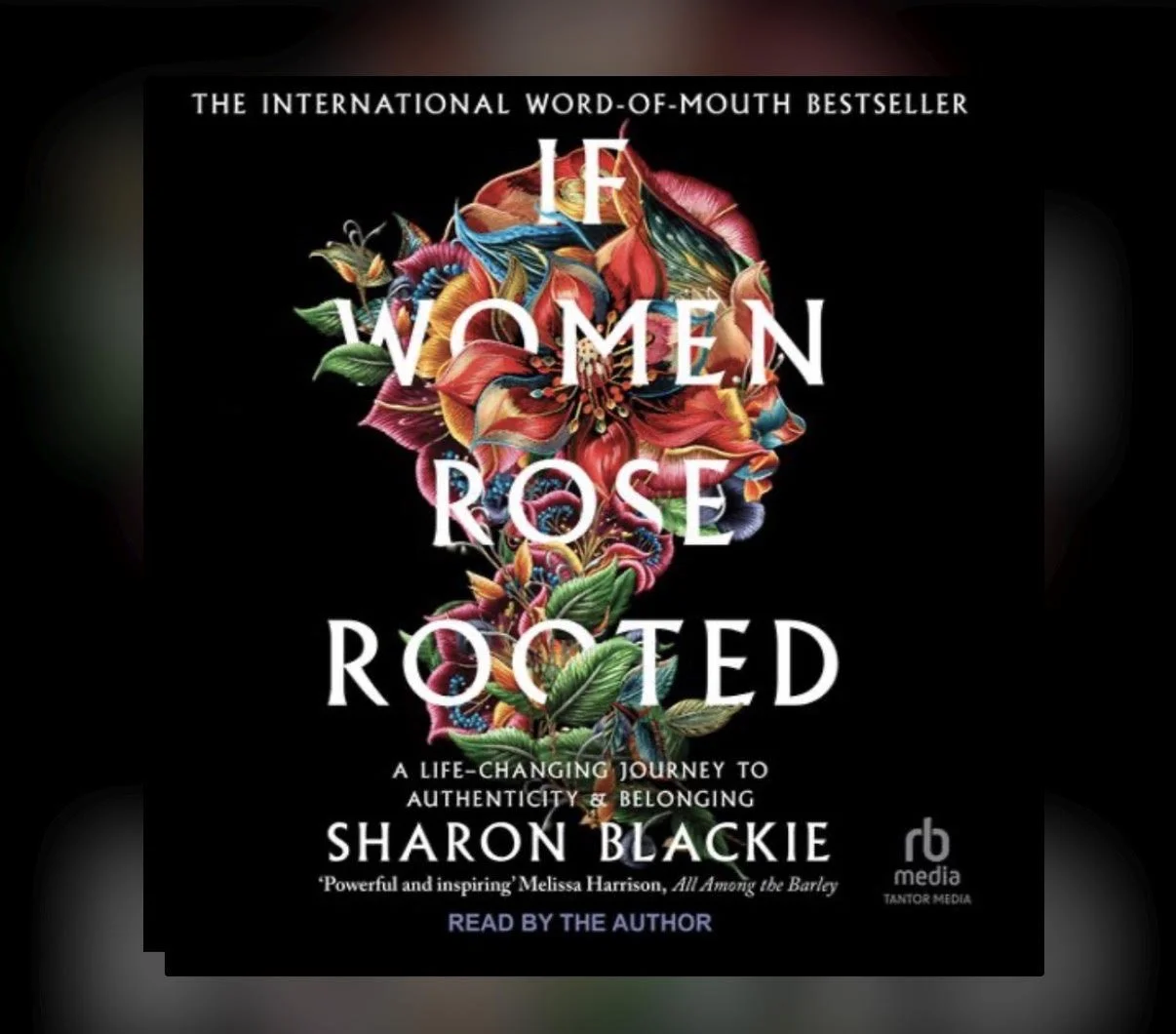
If Women Rose Rooted: A Life-Changing Journey to Authenticity & Belonging (2023) by Dr. Sharon Blackie
Dr. Sharon Blackie paints the picture of our current modern society as a Wasteland–social and cultural beliefs and mores that have created an imbalance in masculine and feminine qualities/energies by way of suppressing, oppressing, and limiting qualities and wisdom of the feminine to reinforce the domination of the masculine. As such, we have tried to survive in a world that is not accepting of all the parts of us and we are becoming ill in our attempts to shape-shift to meet the needs and expectations of an unhealthy social structure. Using the stories of her own ancestral ties, Blackie primarily utilizes Celtic Mythology to exemplify and help us remember the strength, power, and wisdom of the feminine as she calls on, and guides readers to follow their own Heroine’s Journey back to their feminine roots; to rise up and restore balance to their Self and contribute to the restoration of balance in society from a place of connection (rooted) to the Earth, Self, and in community with others.
How was this book recommended to me? I don’t remember, but I ain’t mad.
Would I recommend this to my colleagues? Yes
Would I recommend this to my clients? Yes
How do I apply this content to my work: Dr. Stephen Porges, the originator of the Polyvagal Theory, has been quoted as saying “Trauma is a chronic disruption of connectedness.” And this has become a huge foundation of my work as I am constantly seeing the ways disconnection/isolation/loneliness are both the cause and are often symptoms of trauma on macro, interpersonal, and intrapersonal scales; as well as a way to continue to perpetuate and reinforce it. I’m consistently working with folks who feel like a “shell” of a person because they have focused so much energy creating masks trying to fit into an unhealthy and imbalanced social structure to survive. As such, I am working with people to try to find healing in cultivating their sense of Self; restoring their relationship with Self to be able to sustain healthy relationships with others, environment, and life. But first, from the Polyvagal lens, comes safety (inside, outside, and in-between). How do we find safety within our relationship with our Self when we often feel so unsafe in our world? We have to find those safe relationships with specific others, with Mother Earth (plants, animals, land, etc.), and hopefully with our Self (trusting that we can keep ourselves safe when situations, environments, and/or relationships become unsafe). I often approach this through a combined use of techniques as a trauma therapist, addictions counselor, and dance/movement therapist.
If you live in WA state and feel like you need support with feeling imbalanced as a result of from feeling disconnected from who you are (your Self), contact me. Let’s schedule a free 15-minute consultation and see if we might be a good fit to work together.