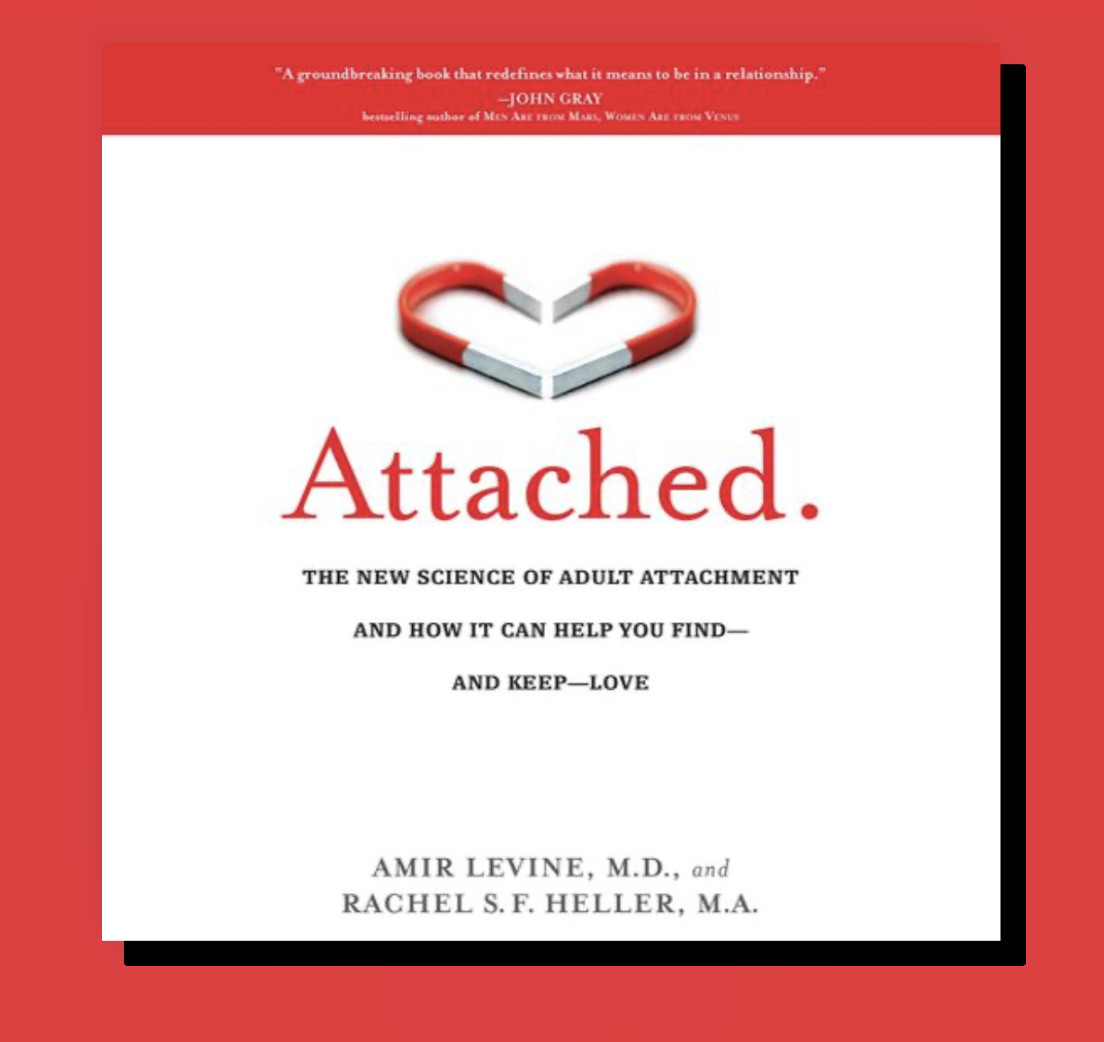
Attached. The New Science of Adult Attachment and How it Can Help You Find–and Keep–Love (2019) by Amir Levine, M.D., and Rachel S.F. Heller, M.A.
Through the application of Attachment Theory, Levine and Heller attempt to explain the challenges and successes of healthy romantic matches and offer suggestions about how one may identify better partners and/or improve their own experiences in romantic relationships. While the book does well to summarize Attachment Theory and its descriptions of Secure, Anxious, and Avoidant Attachment Styles and exemplify how they may play out, I’m not at all impressed with how the book plays out with how to apply this information to improve one’s experience in relationships. The book felt overly simplistic and reductionistic in its approach, and minimizing in the way it exemplified relationship dynamics—seeming to overlook the complexities and nuances inherent in relational experiences. Many of the recommendations about how to improve one’s experience felt akin to “1. Notice your attachment style and 2. Stop doing that (if it’s of the insecure variety)”... as if it is just that simple.
Additionally, the book briefly addressed co-dependency in a way that seemed like it was trying to write it off or separate the concept of attachment from the concept of co-dependency. Furthermore,it didn’t seem like the authors had an accurate understanding of concepts such as co-dependency, hyper-independence, differentiation, connection, disconnection, or co-regulation and how they may all overlap/intertwine and I feel this is problematic.
How was this book recommended to me? I don’t remember.
Would I recommend this to my colleagues? No
Would I recommend this to my clients? No
How do I apply this content to my work: As a trauma therapist and an addictions counselor, identifying relationship dynamics, especially those related to co-dependency, attachment styles, and correlating neurobiology, are common topics and treatment goals that I work on with my clients. While I work with individuals and NOT as a couples or family counselor, I’m consistently addressing relationship dynamics with my clients. Regardless of working with individuals or family units of any kind, the healing (and wounding process for that matter) do not happen in a vacuum and cannot be isolated from the context and dynamics of the systems in which the individual lives. And specifically, as a trauma therapist, I’m looking for the impact of trauma in cultivating insecure versus secure attachment styles; co-dependent/hyper-independent versus inter-dependent/differentiated relationship traits/patterns/behaviors, and patterns of disconnection versus connection. More specifically, coming from a strong foundation of Polyvagal Theory, I’m assessing for cues of safety/danger/life threat inside (the body/the individual), outside (the physical, emotional, energetic environment), AND in-between (relational) to account for triggers, wounds, trauma, resilience, and patterns or connection/disconnection.
If you live in WA state and feel like you need support with taking accountability in how you show up in relationships and identify ways to work toward becoming more Securely Attached, contact me. Let’s schedule a free 15-minute consultation and see if we might be a good fit to work together.