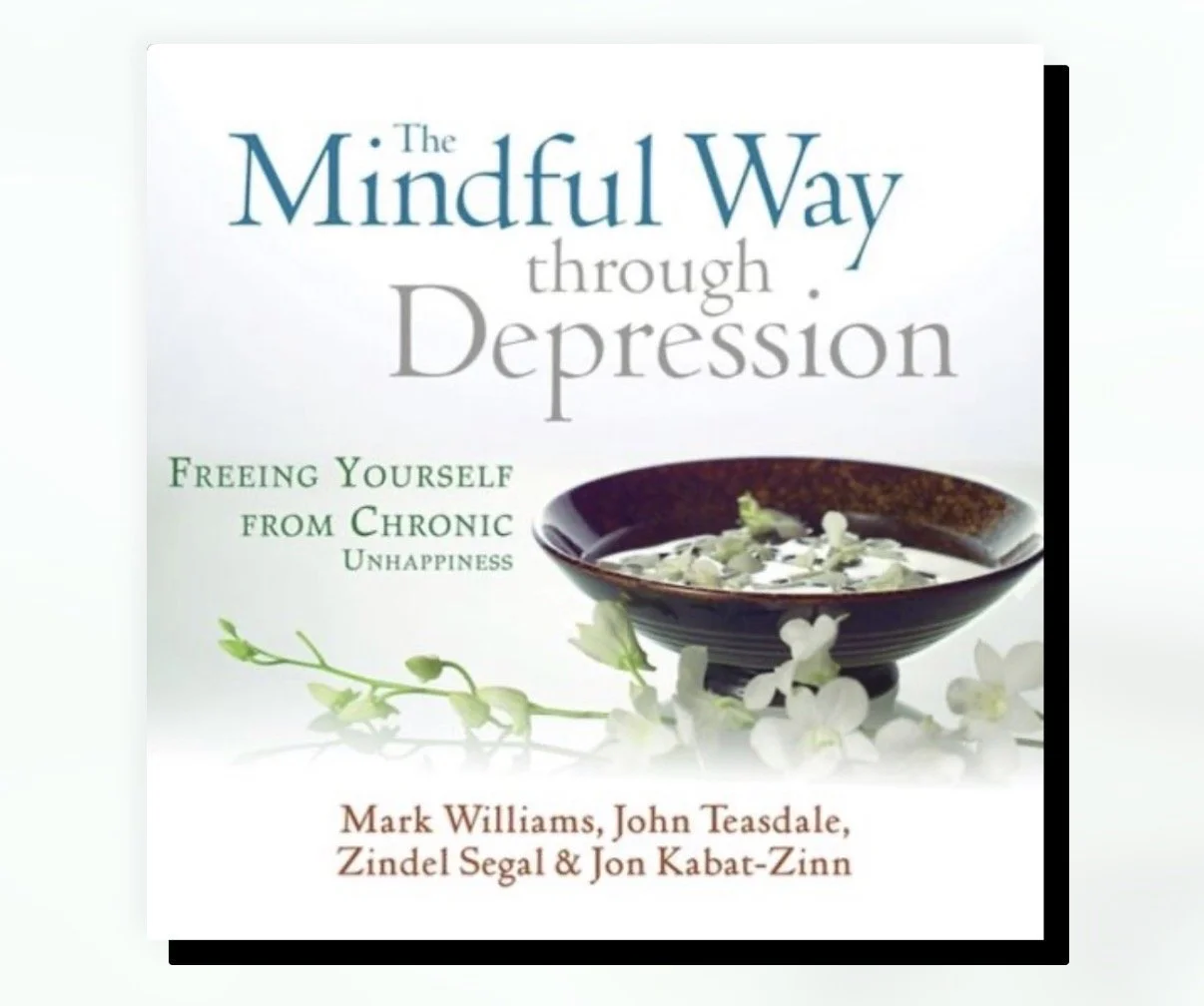
The Mindful Way Through Depression: Freeing Yourself from Chronic Unhappiness (2008) by Williams, Teasdale, Segal & Kabat-Zinn
Kabat-Zinn, et al review the experience of depression and how trying to ‘overcome’ it may be deepening the experience and amplifying the symptoms rather than providing any relief. They have adapted many mindfulness-based tools and techniques from Eastern meditative traditions and cognitive therapy techniques to create an 8-week program to interfere with the vicious cycle of the experience of depression and re-wire neural structures to create more balance and sustainability of chemicals, increased awareness, and empowered styles of thinking and behaving to mitigate relapse known as Mindfulness-Based Cognitive Therapy (MBCT). These four researchers weave in neurobiological research to support the application of and benefits of their program.
The first part of the book breaks down the program and its elements and the second part of the book provides guided exercises to complete (I understand there is an accompanying CD or something with a hard copy of the book, the audio book as this included). I also appreciate identified caveats of the limitations of this program in treating clinical depression, as well as reviewing its benefits.
How was this book recommended to me? It was cited in Nagoski’s Come As You Are.
Would I recommend this to my colleagues? Sure
Would I recommend this to my clients? Sure
How do I apply this content to my work: As a trauma therapist and a dance/movement therapist, I am often treating symptoms of depression/depressed mood. What I appreciate about this program is the integration of mind and body when considering the benefits of mindful awareness. Similar to Polyvagal Theory, which is a foundation of my work, there is a focus on providing tools and techniques that encourage some objectivity of thoughts, mood, behaviors, and/or sensations to create some differentiation between the person and the symptoms. This objectivity helps folx separate their experience from “truth”, as well as providing body-based techniques to help regulate the body and the emotions and cognitive therapy strategies to challenge the negative thoughts (or cognitive distortions) so as not to be swallowed by the symptoms/experience of the depressed mood, and thus continue to spiral further down in its grip.
If you live in WA state and feel like you need support healing from and/or balancing symptoms of depression, contact me. Let’s schedule a free 15-minute consultation and see if we might be a good fit to work together.