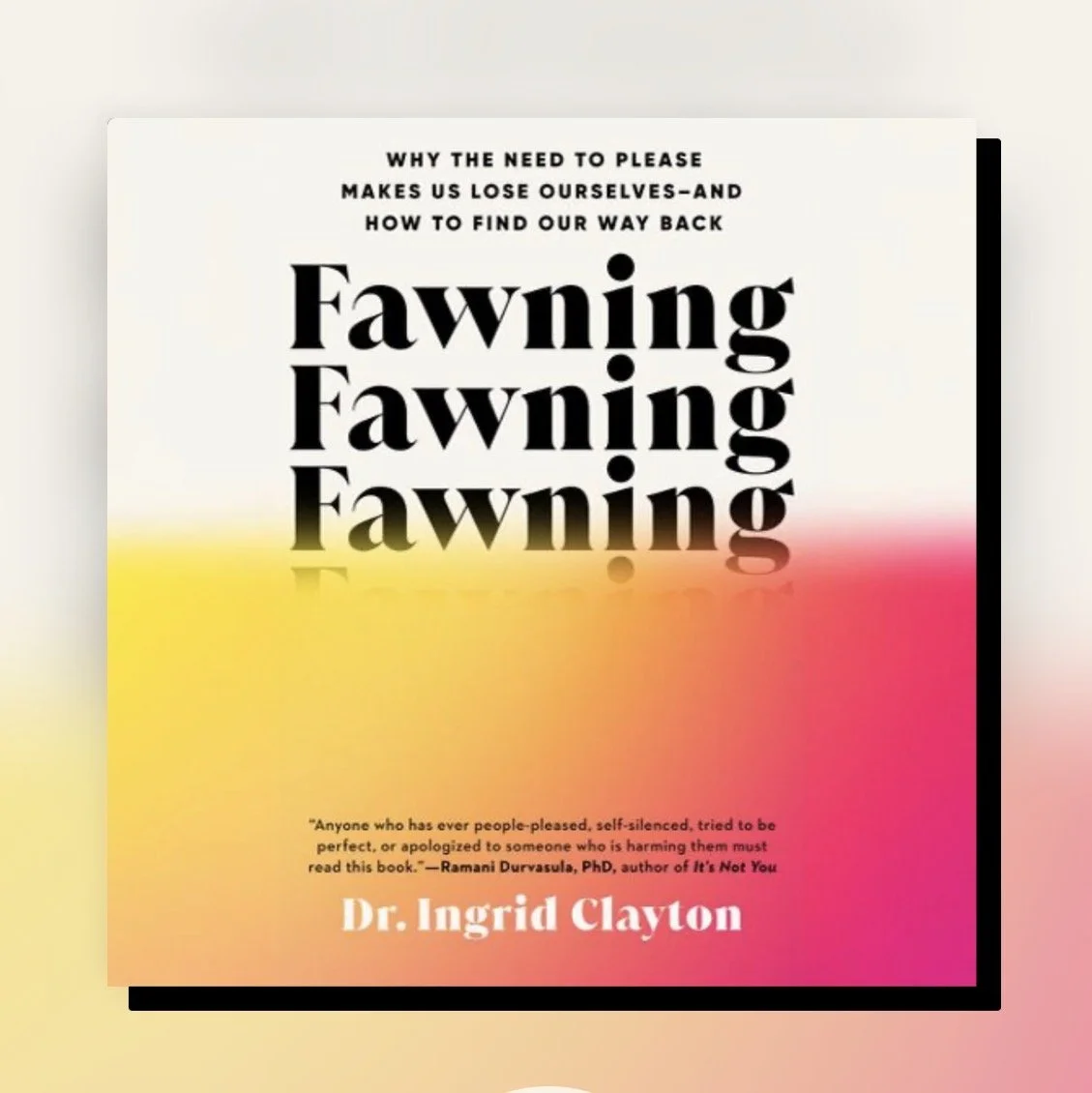
Fawning: Why the Need to Please Makes Us Lose Ourselves – And How to Find Our Way Back (2025) Dr. Ingrid Clayton
Dr. Ingrid Clayton introduces the fourth “F”: Like fight, flight, and freeze, fawning is a survival response. Dr. Clayton cites Pete Walker’s definition of the term within the context of complex PTSD, “a response to a threat by becoming more appealing to the threat” as a way to diffuse conflict and maintain safety and connection with an unsafe relationship. Given what we know about being wired for connection, fawning is a way of sacrificing the Self to maintain the connection in order to survive. Dr. Clayton uses personal anecdotes, as well as client-based anecdotes to exemplify the concept of fawning in Part One of the book, and explores ways to “un-fawn” in Part Two internally and relationally, citing therapeutic techniques she has used to help folks to reclaim their Self.
How was this book recommended to me? I believe it came up in my dance/movement therapy supervision group.
Would I recommend this to my colleagues? Yes
Would I recommend this to my clients? Yes, and already have
How do I apply this content to my work: Given my work as a trauma therapist, and addictions counselor, a dance/movement therapist, and a therapist who strongly utilizes Polyvagal Theory as part of my therapeutic lens, this concept of fawning is highly applicable. I see it in my clients regularly and resonate with it on a personal level. And the process of un-fawning that Dr. Clayton reviews very much aligns with my concept for healing–helping my clients increase their sense of safety (inside, outside, and in-between) by cultivating and increasing their connection with their core sense of Self. I utilize a combination of cognitive and body-based interventions and techniques to help clients come into alignment through integration of mind and body, and do especially highlight the role of embodiment in the process.
Additionally, I appreciate Dr. Clayton’s openness and vulnerability about naming how fawning, and unfawning, has impacted how she shows up as the therapist. As I’ve done my own personal work, I have come to recognize a comparable pattern in myself – how what I had once been taught about not bringing my Self into the space to ensure the focus was entirely about my client inadvertently reinforced/justified my fawn response patterns to hide in plain sight. I have been utilizing much therapy and supervision to challenge these expectations and re-shape my role as a therapist in a way that makes more space to show up as myself in the therapeutic relationship safely and ethically.
If you live in WA state and feel like you need support with unfawning, contact me. Let’s schedule a free 15-minute consultation and see if we might be a good fit to work together.