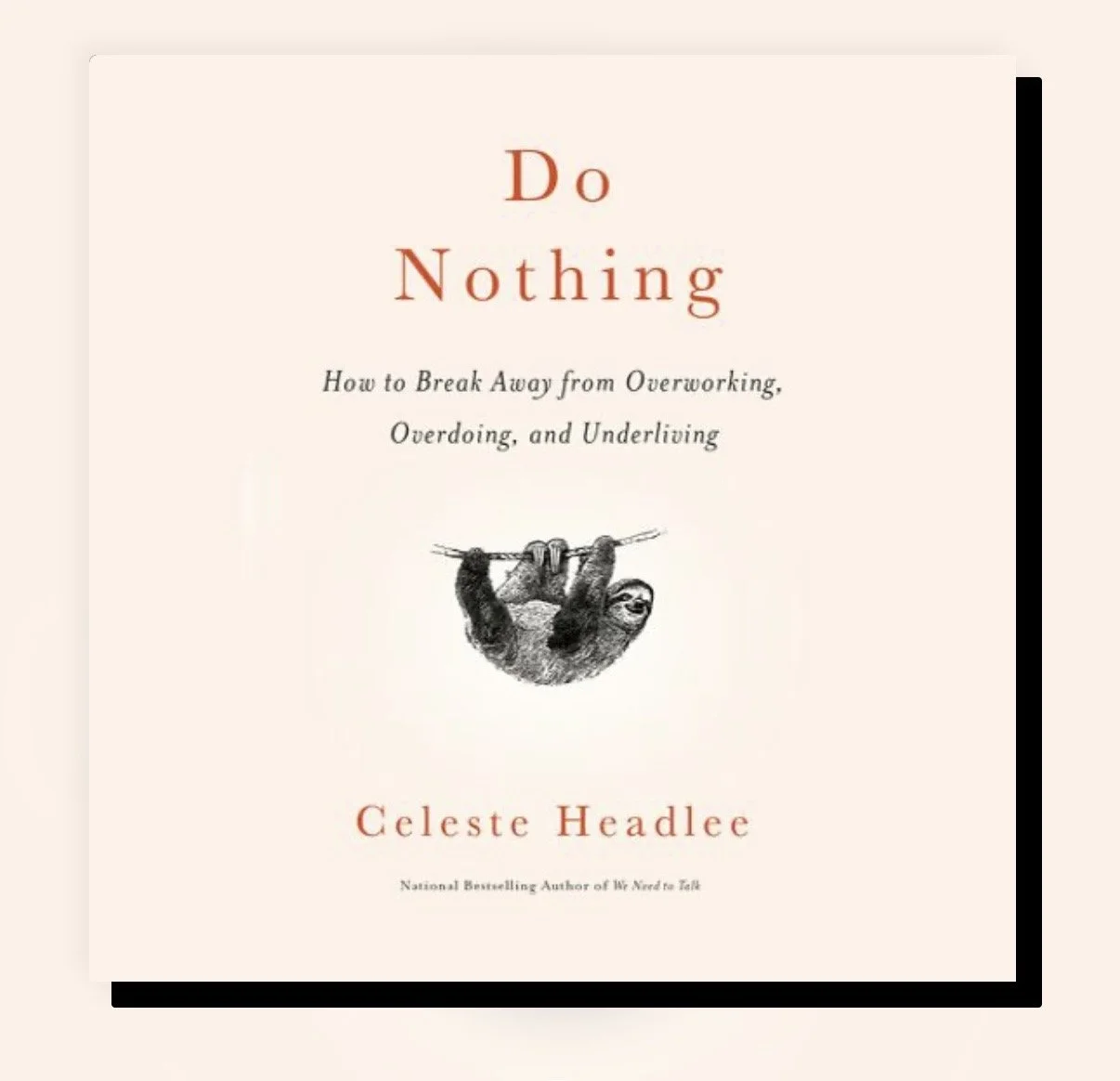
Do Nothing: How to Break Away from Overworking, Overdoing, and Underliving (2020) by Celeste Headlee
Celeste Headless, a journalist, collates multi-faceted research to challenge this deeply ingrained cultural belief that success is driven by constant work and idleness is laziness and identifies key points in history where this message was introduced to the masses. Over time, Headlee highlights social and cultural shifts that continue to successfully create systems of power and control that strip the individual American of identity, resources to manage basic needs, and blurring critical boundaries between the personal and professional. Key themes that appeared to me as I read this book was the development of a system of power and control that benefits those at the top – as if they understand the key components of human neurobiology to pull at just the right strings .
This drive for success has made us sick. We’ve learned to prioritize the job, the company, the product over our basic needs for connection and safety. We’ve been convinced that the workplace is where we will find safety as we are being separated from our families, our friends, and hobbies and swayed to believe that our workplace is like our home and our colleagues are like our families. Many of us are also consistently under the impression we may lose our jobs at any time, and job loss often means loss of income, which (in our capitalist society) often correlates with a loss of basic needs for survival. This feels like quite the double bind. How many of us feel trapped or powerless? Often the only sense of agency any one of us has can be found in the (deluded) belief that we can become the next self-made millionaire through hard work and dedication to our job/company/product. Meanwhile, this imposed scarcity mindset has all but eliminated time for rest, play, and connection. These are the elements that can breed creativity, community, and security–lements that could ultimately threaten the systems of power that benefit from controlling us.
How was this book recommended to me? I think a client brought it to my attention.
Would I recommend this to my colleagues? Yes
Would I recommend this to my clients? Yes
How do I apply this content to my work: My work as a trauma therapist is largely based in Polyvagal theory, which is largely predicated on the need for connection to feel safe and secure and ultimately to thrive (rather than survive). Additionally, or as such, this lends a lot to why a significant part of the recovery process for mental health and addiction encourages authentic connection as part of a community versus isolation breeding relapse. First and foremost, I try to encourage building safe connections through rapport with my clients, and further encourage them to find communities where they can feel connected. Additionally, a significant part of the healing process comes for facing our challenges, wounds, etc. rather than continuing to avoid or distract ourselves from them by focusing on an external force–co-dependent patterns in relationships, the use of drugs/alcohol to numb or dissociate, the roles that we play, the screens that we become glued to, or the facades we carefully construct for external validation from others. And my combination of trauma therapist, addictions counselor, and dance/movement therapist provides a unique lens to support clients in shifting away from “doing” (often to meet an external need for survival) to “being” and building trust, security, and connection with themselves; which often leads to more openness, creativity, play, and connection with others.
If you live in WA state and feel like you need support with feeling like you are in a constant state of survival trying to do too much, contact me. Let’s schedule a free 15-minute consultation and see if we might be a good fit to work together.